

Invisible
On Human Suffrage

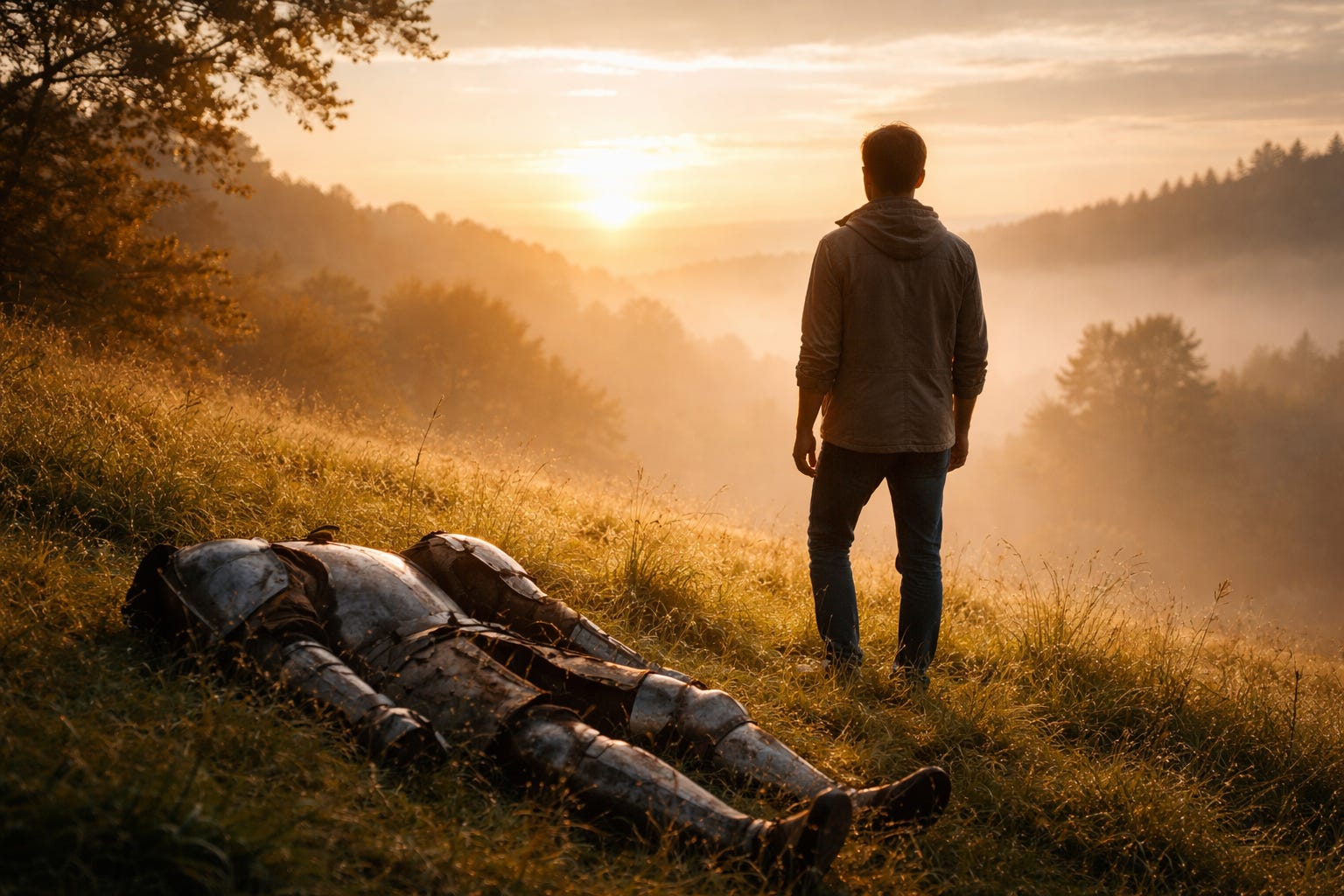
I’ve been thinking about something lately.
Not in an angry way. Not in a political way. Just in that quiet way ideas sometimes sit with you for a while before they decide to speak.
History is full of stories about suffering. Entire chapters are devoted to it. The suffering of nations, the suffering of movements, the suffering of groups who struggled under the weight of injustice. Those stories matter. They should be remembered.
But every now and then I find myself wondering about the kinds of suffering that never quite make it into the chapters.
The quiet expectations.
The roles handed down so long ago that no one remembers who first decided them.
The things human beings were simply expected to endure because that was the way the world worked at the time.
When we hold human beings to rigid ideals long after the world that created them has changed, the harm rarely belongs to one group alone.
In time, it becomes something the whole society carries.
History does not only record events. It also records the expectations people lived under.
And that is something worth remembering.
Remember, remember the Fifth of November…
Most people know the rhyme, even if they don’t always remember the history behind it. It refers to the Gunpowder Plot, a moment that became so embedded in cultural memory that it still echoes through nursery rhymes centuries later.
History has a curious way of doing that. Certain events become symbols, repeated so often that they feel permanent. They become reminders of danger, loyalty, betrayal, survival. Over time the rhyme becomes more familiar than the story itself.
But history does more than give us things to remember. It also gives us habits. Expectations. Ways of thinking about what human beings are supposed to be.
Many of the roles we inherited were not born out of cruelty. They were born out of necessity.
For most of human history, life was not gentle. Survival required hard choices and clear divisions of responsibility. Societies developed expectations about who would defend the village, who would work the fields, who would raise children, who would hold families together when the world outside became dangerous.
These roles were not philosophical ideas. They were survival strategies.
And for a time, they worked.
The trouble with survival strategies is that they have a way of outliving the world that created them. What begins as necessity slowly becomes tradition. Tradition becomes culture. Culture becomes expectation.
Before long, the roles themselves begin to feel natural, as though they had always been there.
But history rarely stops to ask whether the conditions that shaped those expectations still exist.
Roles born of survival have a strange habit of lingering long after survival itself has changed.
History has a long memory.
Even when the world changes, the ideas shaped by earlier centuries tend to linger. They settle quietly into culture, into habits of thought, into the unspoken assumptions people carry about what strength looks like, what duty means, and what human beings are expected to endure.
The past rarely disappears. It simply becomes the air we breathe.
In many ways, the modern world is vastly different from the one that created the roles we inherited. Our societies are more stable, more interconnected, and far less dependent on the constant physical struggles that once defined daily life. Yet many of the expectations formed during those harsher centuries remain woven into the way we think about one another.
Sometimes those expectations even become something we admire.
It was the writer Oscar Wilde who once observed:
“As long as war is regarded as wicked, it will always have its fascination. When it is looked upon as vulgar, it will cease to be popular.”
Wilde had a remarkable ability to notice the strange contradictions in human culture. His point was not that violence was admirable, but that societies sometimes give it an odd kind of romance. The harder something appears, the more it can begin to look like a proof of character.
Over time, suffering itself can take on a kind of symbolic value.
Endurance becomes a virtue.
Sacrifice becomes a badge of honor.
Hardship becomes a test of worth.
None of these ideas appear overnight. They are the slow inheritance of centuries in which survival demanded extraordinary resilience from ordinary people.
But when those expectations remain long after the world that created them has changed, they can quietly reshape the society that carries them forward.
People begin to measure themselves against ideals that were never designed for the lives they are actually living. Entire generations grow up believing that certain forms of hardship are simply part of what it means to be human.
And because those expectations are so familiar, they often become invisible.
We inherit them the way we inherit language, rarely noticing the moment when we learned to speak them.
The past may be gone, but the stories it told about strength, duty, and sacrifice still echo through the present.
Sometimes more loudly than we realize.
Understanding the past is not the same thing as condemning it.
Every generation inherits a world shaped by the choices of those who came before. Some of those choices built the foundations of the stability we enjoy today. Others left behind expectations that no longer quite fit the lives we are living.
The difficult work of any society is learning to tell the difference.
It is easy to inherit traditions. It is much harder to examine them.
The question is not whether earlier generations were wrong. They did what human beings have always done, they adapted to the conditions they faced. The roles they created often made sense in the world they knew.
But the world changes.
And when the world changes, wisdom sometimes requires us to ask whether the expectations we inherited still serve the people who live under them.
The leader of India’s nonviolent independence movement, Mahatma Gandhi, once wrote:
“I object to violence because, when it appears to do good, the good is only temporary, the evil it does is permanent.”
Gandhi was not speaking only about war or political struggle. He was speaking about a deeper truth of human societies. Violence, suffering, and hardship may sometimes appear to produce strength or order in the short term. But the habits they leave behind often echo far longer than the circumstances that first justified them.
The expectations that grow out of those habits can become part of the culture itself.
When that happens, people may begin to measure themselves against ideals that were never meant to guide a peaceful and cooperative society. Strength becomes confused with endurance of pain. Duty becomes confused with the willingness to suffer silently. Worth becomes tied to roles that individuals may never have chosen for themselves.
And slowly, the quiet weight of those expectations spreads.
It affects how we see one another.
It shapes how we measure success.
It even influences what kinds of lives people believe they are allowed to live.
But the future is not something we inherit unchanged. It is something we shape, often by asking the questions earlier generations did not have the luxury to consider.
Perhaps progress is not measured only by the freedoms we gain.
Sometimes it is measured by the roles we finally allow one another to set down.
Remember, remember the Fifth of November…
History teaches us many things. It teaches us the names of battles, the rise and fall of nations, the victories people celebrate and the tragedies they mourn. It tells us what mattered enough to write down.
But sometimes the quieter parts of history slip through the cracks.
The expectations people lived under.
The roles they were asked to carry.
The things human beings endured simply because no one thought to ask if they should.
Those inheritances rarely belong to only one group. In time, they shape the whole society that carries them forward.
Perhaps remembering the past is not only about honoring what came before.
Perhaps it is also about recognizing when we are finally free to let some of it go.
If you’d like to support my publication, you can become a paid subscriber, buy me a tea, or
share this with someone who might need it.
Also, if you would like to purchase one of my books on Amazon, please visit the links below:
A Robe Full of Poems: Thoughts from the Mesh
Quiet Rooms: Three Reflections from the Robe
Every little act helps keep the robe warm, the mesh humming, and this work unfolding.
If you’re new:

And please visit my Official Home page at: The Entangularity Project
Stay entangled, my friend.
—The Bathrobe Guy
Buddhist Philosophy is simple: " suffering is when you want things to be different than what they are" aka dukka
Suffering, as you articulated, is an attachment to traditions and beliefs that no longer serve how a person must navigate their current conditions to survive yet still carry the weight of generational expectations.
The problem isn't the beliefs or expectations, it's that they go unchallenged.
If I agree to a person's expectations of me, including family, I may fit in their world, but I no longer belong to myself.
Those who suffer, don't even realize they have the choice not to.
You can still carry generational traditions & beliefs in your heart and you won't erase them from your mind and you can still give yourself permission to choose your own.
Much like a statue that is taken down because of those who now find it offensive, it doesn't erase the history that it carried. There is an energetic aura of the statue that still exists in the mind when you pass by the place where it used to exist.
There were reasons traditions were created, and there are reasons for them to evolve and maybe even let go because the circumstances to be served no longer exist.
Change your thoughts and the world around you changes, as they say.
What thoughts are you willing to hold on to and which ones are you willing to let go of.
Once again, choose whatever will give you peace.
Keep the robe. It's a good tradition to continue.
Blesssings my friend.
This gave me a lot to reflect on. The idea that expectations shaped by survival can quietly linger long after they’re needed feels especially true.
There’s something important in learning to recognize what can finally be set down.