

Crazy Weather
Remembering the sky before we learned to fear it

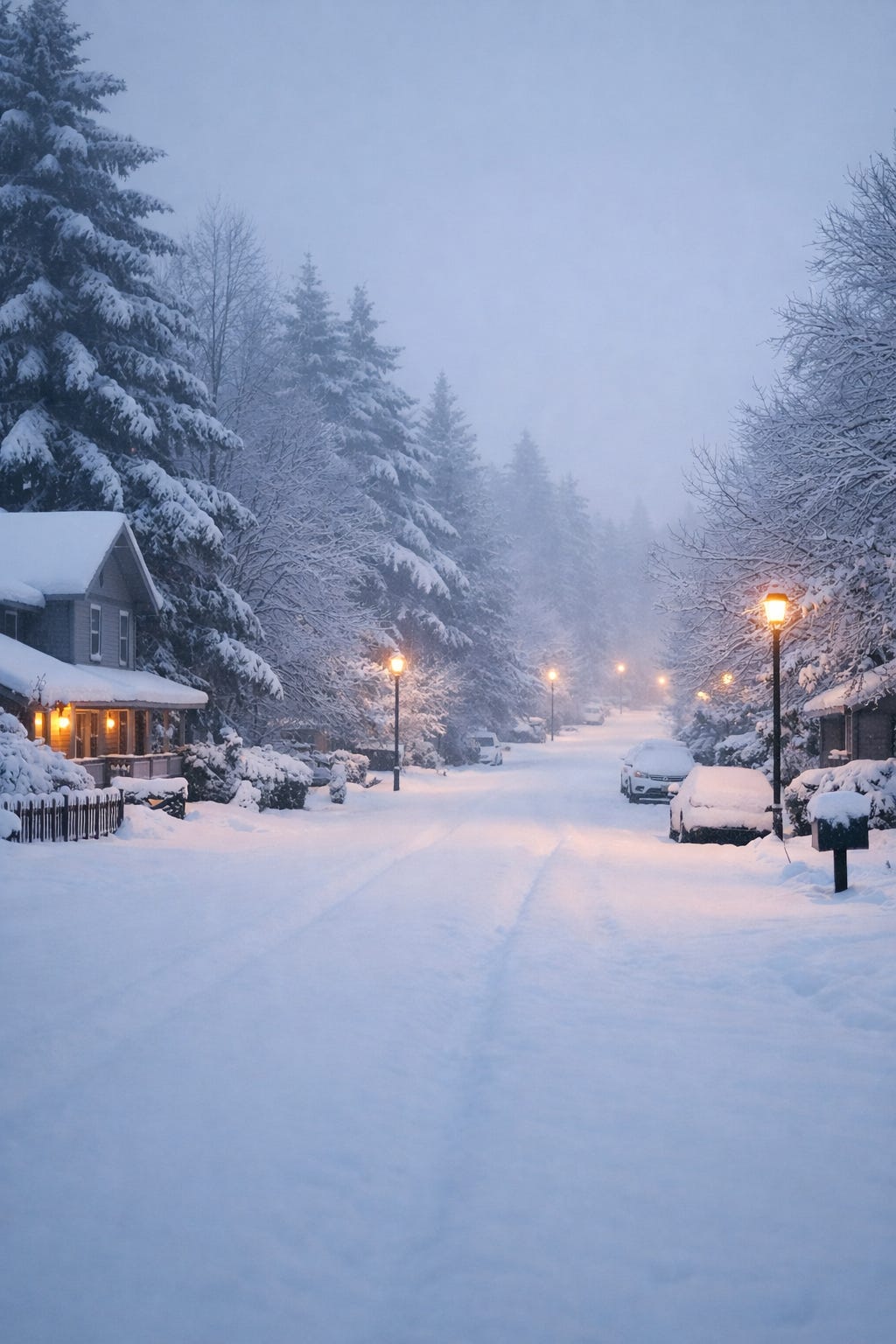
There are certain kinds of weather that stay with us long after the clouds move on. Not because they were extreme, but because they were formative. They arrived when we were young enough to meet them without explanation, without forecasts, without fear already waiting in the wings.
This isn’t a reflection on climate or catastrophe. It’s a remembering. A return to the way weather once entered our lives as a presence rather than a problem, something we lived inside before we learned to manage it.
The sky didn’t ask permission back then.
It simply showed up.
Some mornings it arrived heavy and gray, pressing low over the houses like it had weight. Other days it cracked open without warning, thunder rolling through the walls at night, rattling windows, making the dark feel alive. Snow sometimes came sideways, quiet and relentless, changing the shape of the day before anyone had time to decide what it meant.
As a kid, the weather wasn’t something you checked. It was something you noticed. You woke up inside it. You listened to it move across the roof. You felt it before you understood it. The air smelled different. The light shifted. The world paused or hurried or softened without explanation.
Weather wasn’t background noise.
It was part of the story.
And long before it became something to manage, or fear, or track on a screen, it was simply something you lived inside, one sky at a time.
Snow days never felt announced. They felt discovered.
You’d wake up and notice the quiet first. Not silence exactly, but a softness, like the world had been wrapped in cloth overnight. Sound didn’t travel the same way. Cars moved slowly, if they moved at all. Even your own footsteps seemed unsure where to land.
The smell came before the sight. Cold and clean, with something else underneath it, something like metal and water. You’d look out the window and see it piled against the edges of things, steps erased, fences rounded off, the sharp corners of the neighborhood gently removed.
School disappeared without ceremony. Sometimes there was a radio announcement, sometimes it was just understood. The rules that usually held the day together loosened. Time opened up. Pajamas lasted longer. Breakfast didn’t rush. The world had agreed, collectively, to stop trying for a while.
Snow wasn’t an inconvenience then. It was permission.
You went outside because you could. Because everything felt different once you crossed the threshold. Snow soaked gloves and stiffened jeans. It numbed fingers and burned cheeks. It made your breath visible, proof that you were still there, still moving inside it.
Nothing needed to be productive. Nothing needed to be explained. The day belonged to the weather now, and somehow, that felt right.
Thunderstorms at night felt different.
Bigger. Closer. Like the sky had decided to come all the way down to the house and make itself known.
You’d be in bed, covers pulled up, the room lit in flashes you didn’t ask for. Lightning slipped through the edges of the curtains, turning familiar shapes into something briefly unrecognizable. The walls would hum for a second after each strike, as if the house itself needed a moment to settle.
Thunder didn’t arrive politely. It rolled in low and long, sometimes cracking sharp enough to make your chest tighten before you could stop it. You didn’t know how far away it was. You didn’t know if it was moving closer or pulling back. There was no map for it, no voice explaining what came next.
You just listened.
Fear showed up, but it wasn’t panic. It was awe mixed with not knowing what to do about it. The kind of fear that makes you very still. That makes you pay attention. You counted the seconds between the flash and the sound without really knowing why, just because it felt like something you were supposed to do.
Adults didn’t rush in with explanations. They didn’t narrate the storm. Sometimes they just let it pass, the same way the sky did. You learned, without being told, that some things couldn’t be fixed or managed. They could only be waited out.
When the storm finally moved on, the air felt different. Cooler. Cleaned out. Like the night had been rearranged while you were lying there, listening, learning how small you were and how alive the world could be at the same time.
Rain didn’t arrive with drama.
It just stayed.
It tapped the roof at first, soft and patient, then settled into a rhythm that could last for days. Sometimes you noticed it. Sometimes it became the background hum of everything else, like breathing. At night it drummed overhead, a low, constant sound that made sleep feel deeper, heavier, earned.
If you wanted to play outside, you went anyway. There wasn’t much choice. Rain wasn’t an event, it was a condition. Jackets soaked through. Sneakers squished. Jeans clung and never quite dried. You learned which puddles were shallow and which ones swallowed half your leg.
Sometimes it just kept raining.
You ran anyway. You climbed anyway. You came home wet and cold, peeling layers off by the door, leaving damp footprints that would disappear on their own. No one made a big deal of it. You hadn’t been reckless; you’d just been a kid in the weather.
Rain stretched time. Days blurred together. The sky stayed low and gray, but not threatening. Just present. You learned how to listen to it, how to move with it instead of against it. Rain taught endurance without calling it a lesson.
It wasn’t magical like snow or frightening like thunder. It was ordinary persistence. And in that persistence, something settled in you. A quiet understanding that some things don’t need to stop before life continues. You just learn how to be wet, and keep going.
Before you knew what weather was called, your body already understood it.
You could smell rain before it arrived. Something sharp and green in the air, like the ground waking up. Pavement gave off a strange warmth when it had been dry too long, a scent that meant heat was finally breaking. You didn’t think it’s going to rain. You just knew.
Fog moved differently. It didn’t fall or crash or announce itself. It drifted in low, swallowing edges, softening distance. Mornings began inside it, the world half-finished. Trees appeared a little at a time. Houses emerged slowly, like they were being remembered into place. And then, almost without noticing, the fog would lift, thinning upward, evaporating into the sky as if it had never been there at all.
Your body noticed before your mind did. The damp in your bones. The way air felt heavier or lighter in your lungs. The way a day asked you to move slower or faster without explaining why. Weather wasn’t information yet. It was sensation.
Rain carried smells too. Earth opening. Leaves rinsed clean. Wood darkening. The world didn’t just look different after a storm, it felt different, like it had been reset just enough to notice.
This was weather learned through attention, not prediction. Through skin and breath and memory. Long before forecasts or alerts, your body was already fluent in change.
At some point, without anyone announcing it, the weather changed roles.
You learned to check it before leaving the house. To plan around it. To measure it in percentages and warnings. Surprise gave way to preparation. Rain became something you dressed against instead of lived inside. Snow became a problem to solve. Thunder became a notification.
The sky didn’t feel closer anymore. It felt monitored.
Forecasts replaced attention. Apps told you what was coming before your body had a chance to notice. Fear arrived early now, sometimes before the clouds did. Weather stopped being part of the day and started being something to get through.
Nothing dramatic marked the shift. It happened the way most changes do, slowly, sensibly, with good intentions. Safety. Efficiency. Control. All reasonable things.
But something small was lost in the exchange.
The weather didn’t stop being unpredictable. We just stopped standing in that unpredictability long enough to feel it. We learned to brace instead of listen, to prepare instead of notice. The sky stayed alive. We stepped back.
Crazy weather was never the exception.
It was the rule all along.
As kids, we lived inside that truth without naming it. Snow came when it came. Rain stayed as long as it wanted. Storms passed through and left the air rearranged. Nothing promised consistency, and somehow that felt normal. We adapted without thinking about it. We learned impermanence by standing in it, soaked or shivering or quiet with wonder.
The weather didn’t become unpredictable later. We did. Or rather, our expectations did. We started asking the sky to cooperate, to behave, to warn us ahead of time. And when it didn’t, we called it crazy.
But maybe it was only honest.
There’s something worth remembering in the way we once met the weather, without forecasts or fear, just attention. Listening to rain on the roof. Watching fog lift into morning. Feeling the air change before we knew why. Letting the day be shaped by the sky instead of resisting it.
We don’t have to go back. Childhood isn’t a place you return to. But we can stand outside again, just long enough to remember that uncertainty isn’t always danger. Sometimes it’s just weather, moving through, doing what it’s always done.
I don’t think the weather has grown stranger so much as our relationship to it has grown tighter, more guarded. We want advance notice now. Reassurance. Control.
But sometimes, I wonder what would happen if we let the sky surprise us again, just a little. If we remembered how to listen before we learned to predict. If we trusted our bodies, our senses, and our attention the way we once did, standing in the rain because it wasn’t going to stop anyway.
If this robe-wrapped resonance found a place in you, please consider supporting what I do:
📬 Become a free or paid subscriber
💛 Buy me a tea
💲 GoFundMe
💵 Cash App: $Mnisape
🔗 Or share this with someone who might need it.
Every little act helps keep the robe warm, the mesh humming, and this work unfolding.
If you’re new:

And please visit my Official Home page at: The Entangularity Project
Stay entangled, my friend.
—The Bathrobe Guy (Robes)
In reading this piece, I lived again in the excitement of snow days, the trembling of thunder above the house, the tedium of rainy days. And then, how I changed to no longer live in the weather but relied on systems to forecast, to control, to see weather as Other. No, we can’t go back to childhood, but we can see now how much the weather was always teaching us. Thanks for this reminder!
You're welcome Robes.
You are a masterful word weaver and storyteller.