

A Quiet Refusal
Where conscience meets a line I cannot cross

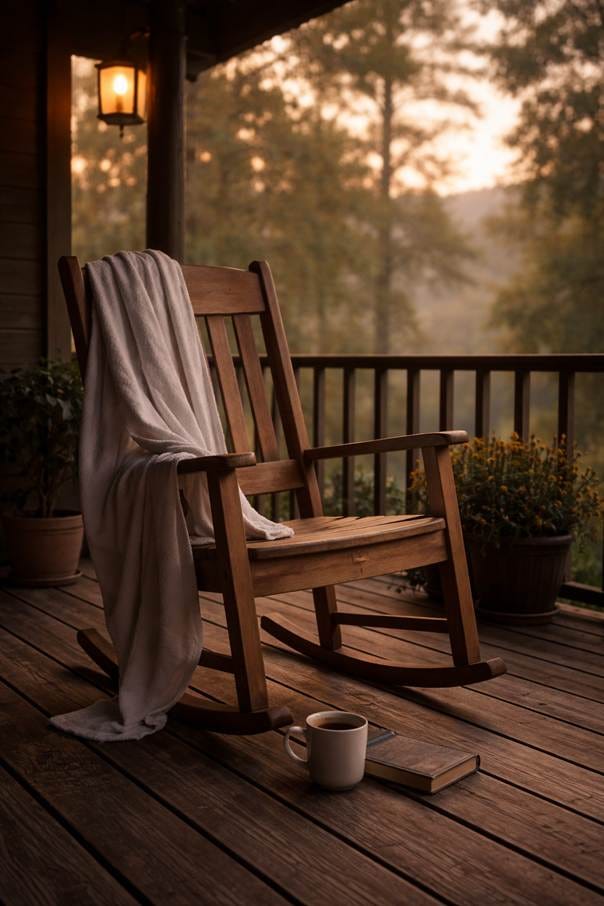
I have been sitting with something for a while now.
Not in the loud, reactive way that so much of the world seems to move these days, but quietly; the kind of knowing that does not arrive all at once, but settles in slowly, like dust in still air.
It is not anger that brought me here. Not outrage. If anything, it is the absence of those things. A kind of clarity that only seems to come when the noise dies down and you are left alone with your own thoughts, your own conscience.
There are moments when you realize that staying silent is no longer the same thing as being peaceful.
And that is where I find myself now.
Not looking for a fight, not looking to convince anyone, but simply no longer able to pretend that I do not see what I see, or feel what I feel.
Part of where this comes from, for me, is the path I walk.
Not because it is better than any other, or because I believe it holds some exclusive truth, but simply because it is the one that has shaped how I understand the world.
Through my Buddhist practice, I have come to see suffering not as something abstract, but as something that moves through us, between us, carried in actions, in words, in the things we justify and the things we ignore.
And more than anything, I have come to understand how easily harm becomes a cycle.
How one act gives rise to another, how pain unanswered becomes pain repeated, how what we permit, even quietly, begins to take root.
It has made it harder, over time, to look away.
And harder still to participate in anything that continues that cycle.
It is from that place that I find myself unable to support war.
Not because I do not understand that the world is complicated, or that there are moments that feel as though force is the only language left on the table. I understand why people arrive there. I understand the fear, the urgency, the desire to protect.
But understanding something is not the same as aligning with it.
War does not end suffering. It redistributes it. It delays it. It transforms it into something that lingers long after the last shot is fired, carried in bodies, in memory, in generations that inherit wounds they never chose.
There is a reason so many traditions, across time and culture, have warned us about answering harm with harm.
“An eye for an eye will only make the whole world blind.”
—Mahatma Gandhi
I cannot look at what war leaves behind, again and again, and tell myself that this time will be different.
I cannot call it necessary without also acknowledging what it costs.
And I cannot, in good conscience, support it.
If war shows us how suffering can be carried across borders, the question of rights brings it home to the body; to the individual, to the quiet, personal spaces where people live their lives.
There are some things that should never be conditional.
Not dependent on who holds office, not subject to the shifting winds of ideology, not granted or taken away based on who is deemed worthy in a given moment.
A person’s autonomy; their ability to make decisions about their own life, their own body, their own future, is not a political bargaining chip. It is a reflection of dignity.
This is especially clear when it comes to women’s rights, which have so often been treated as something negotiable, something to be debated rather than respected.
But dignity does not change with elections.
It does not rise and fall with power.
“Darkness cannot drive out darkness; only light can do that. Hate cannot drive out hate; only love can do that.”
—Dr. Martin Luther King
If we begin to accept the removal of rights as a tool, even for reasons we believe are justified, we step into a pattern that history has shown us does not end well.
And that is not a path I can support.
There is another layer to all of this that I find myself unable to ignore.
It is not simply the actions themselves, but the direction they point; the quiet shift from protecting people to managing them, from serving the public to shaping it.
History has shown us, time and again, that when power begins to merge with rigid ideology, especially when it claims moral or divine authority, something changes. What begins as guidance can become control. What begins as belief can become enforcement.
This is not a criticism of faith. Faith, at its best, can be a source of compassion, of humility, of care for others.
But when it is used as a foundation for governance in a way that limits rather than protects, it moves away from those roots.
It becomes something else.
Something less about care, and more about conformity.
And when any system, political or otherwise, begins to define who is allowed autonomy and who is not, it steps into dangerous territory.
That is not a direction I can follow.
I want to be clear about something.
This is not about sides.
Not about left or right, not about party or personality, not about who is in power at any given moment. These things change, often more quickly than we expect.
What matters is what is being done with that power.
It would be easy to frame all of this as a disagreement with a particular group, to draw lines and place people on one side or the other. That is the language we are used to. It is how most conversations are shaped.
But that framing misses something important.
This, for me, is about conscience.
About the quiet, internal line each of us carries, whether we acknowledge it or not; the point at which something no longer feels aligned, no longer feels justifiable, no matter how it is explained.
And that line does not belong to any one side.
There comes a point where reflection becomes decision.
Not loud, not dramatic, but settled.
And for me, that point has come.
I cannot support war.
I cannot support the removal of rights from people, no matter how it is framed or justified.
I cannot support the use of power to control rather than to protect.
And I cannot support the merging of governance with any ideology that seeks to limit who is allowed dignity and autonomy.
These are not positions I arrive at lightly.
They are not reactions to a moment, or to a headline.
They are the result of sitting with these questions, again and again, until the answers stopped shifting.
Until they became still.
And once something becomes that clear, it is no longer something I can step around.
I do not say any of this with anger.
I do not say it to divide, or to place myself in opposition to anyone.
If anything, I say it with a kind of sadness; not hopelessness, but the recognition that we are capable of more than what we often choose.
This is simply where I stand.
Not above anyone, not apart from anyone, but within the same world, the same systems, the same shared responsibility for what we allow and what we resist.
I will not meet harm with harm.
I will not accept the removal of dignity as a necessary cost.
And I will not pretend that something feels right when it does not.
If there is anything I still hold onto, it is this:
That we can do better.
And that, at the very least, we can begin by being honest about where we stand.
If you’d like to support this work, you can become a paid subscriber, buy me a tea, or share this with someone who might need it.
You can also explore my books:
A Robe Full of Poems: Thoughts from the Mesh
Quiet Rooms: Three Reflections from the Robe
Every little act helps keep the robe warm, the mesh humming, and this work unfolding.
If you’re new: Start Here
And please visit my Official Home page at: The Entangularity Project
Stay entangled, my friends
—The Bathrobe Guy
I read your words, and something in me didn’t react — it stayed.
I recognize that point you’re speaking from, where silence is no longer peace.
And yet, what moves in me goes in a slightly different direction. Not toward a stronger stance, but toward a quieter one.
I’m beginning to wonder whether it’s possible to stop participating in what creates harm… without creating further division in the way we refuse it.
I don’t have a clear answer.
But that is where I find myself.
Robes, I read your wise and heartfelt piece several times and then read it aloud to my husband. We felt your words and feel the loving peace within. Xx ❤️